The Manitoba Veterinary Medical Association (MVMA) is aware of public concerns regarding blastomycosis in dogs and would like to provide information to help pet owners better understand the infection, recognize potential symptoms and know when to seek veterinary care.

The MVMA does not collect or track cases of blastomycosis in dogs and is therefore unable to confirm the number of reported cases, fatalities or locations associated with infections in Manitoba.

What is blastomycosis?

Blastomycosis is a fungal infection caused by Blastomyces, a fungus that can be found in the environment, particularly in moist soil and decaying organic matter, often near bodies of water.

Dogs and humans can become infected by inhaling airborne fungal spores. Blastomycosis is not considered contagious and is not transmitted directly between animals or from animals to humans.

How does exposure occur?

Fungal spores can become airborne when soil containing the fungus is disturbed, such as through digging.

Dogs that dig, sniff or put their noses close to contaminated soil may be at greater risk of exposure. Simply walking through an area does not necessarily result in infection, and not all animals exposed to the same environment will develop blastomycosis.

As a precaution, pet owners are encouraged to discourage their dogs from digging in or closely investigating disturbed soil, particularly in areas where the fungus may be present.

What are the symptoms in dogs?

Symptoms of blastomycosis can vary depending on which organs are affected and may include:

  • Coughing or difficulty breathing
  • Fever
  • Lethargy or decreased energy
  • Loss of appetite or weight loss
  • Lameness
  • Eye inflammation or other vision-related problems

Symptoms may not appear until several weeks or months after exposure.

What should pet owners do?

Pet owners who notice any of these symptoms or are concerned their dog may have been exposed to blastomycosis are encouraged to contact their veterinarian promptly.

These symptoms can also be associated with other illnesses, and a veterinarian can assess an animal’s condition, recommend appropriate diagnostic testing and discuss treatment options.

Additional information

For more information about blastomycosis, including potential sources of exposure and prevention, please refer to the Government of Manitoba’s Blastomycosis Fact Sheet.

The MVMA encourages pet owners to remain informed and seek veterinary advice if they have concerns about their animal’s health.


The Canadian Veterinary Medical Association (CVMA) is looking for photos and stories from veterinarians across Canada as part of its Behind the Care public awareness campaign.

The campaign aims to highlight the diverse roles veterinarians play in animal, human and environmental health, particularly those the public may not be familiar with.

MVMA members are encouraged to submit photos and stories that showcase their work in a variety of settings, including veterinary clinics, farms, laboratories, wildlife conservation, research and beyond.

Professional-quality photos are preferred but not required. The CVMA is also interested in hearing about unique career paths and experiences that demonstrate the breadth of the veterinary profession.

Photo permissions and releases will be coordinated by the CVMA before any submitted materials are used.

Interested in participating? Please send your photos, stories or questions to Michelle Kusano at engagement@mvma.ca, and we’ll help coordinate submissions with the CVMA.

Help us shine a spotlight on the incredible work veterinarians do every day!


The MVMA extends its congratulations to Dr. Wayne Lees on his induction into the Manitoba Agricultural Hall of Fame!

Dr. Lees was recognized as part of the 2026 class of inductees for his contributions to Manitoba’s agricultural sector. Throughout his career, he has worked in veterinary medicine, animal health, disease surveillance and public health, including serving as Manitoba’s Chief Veterinary Officer.

His career highlights the important role veterinarians play in protecting animal health, supporting agriculture and strengthening communities.

Congratulations, Dr. Lees, on this well-deserved recognition!

Read more about Dr. Lees and his contributions.


For equine practitioners and trainees, VCRS is offering a hands-on Equine Respiratory Wet Lab on Saturday, November 7 2026,  College Station, Texas focused on practical approaches to respiratory disease in horses. Participants will have 5 practical lectures in the morning, lunch, and then rotate through small-group, hands-on stations covering bronchoalveolar lavage and cytology, upper and lower airway endoscopy, thoracic imaging, sinus procedures, foal resuscitation and respiratory management, and aerosol drug delivery/nebulizer techniques with a total of 8.5 hr RACE-approved CE hours. The program brings together an outstanding group of equine clinicians and educators, including:

along with faculty from Texas A&M and other institutions. The wet lab is particularly relevant for equine general practitioners, sport/performance-horse veterinarians, veterinarians with a respiratory interest, interns and residents, and other equine-focused trainees. Additional information and registration available at: tx.ag/EquineWetLab

The wet lab immediately precedes the VCRS Symposium, November 8–10, brings together veterinarians and researchers from across species to explore respiratory health through a comparative lens (21.5 RACE-approved CE hours available). Programming spans primarily small animal and equine respiratory medicine, with topics including airway disease and asthma, infectious respiratory disease, respiratory immunology, neonatal respiratory care, aerosol therapeutics, and ventilatory support. This year’s program includes invited experts from veterinary and human medicine as well as 29 research abstracts, with a strong equine representation. In-person and virtual options are available for the Symposium – more information and registration is available at: tx.ag/VCRS2026


Researcher Jamie McNally, Ph.D., LPC (Fortifyu) is studying the moral, emotional, and workplace experiences of people who work or volunteer with animals, across all sectors. If you are 18 or older and currently or formerly work or volunteer in an animal-related role (paid or unpaid) and can complete the survey in English, you are invited to take part in an IRB-approved survey of about 15–25 minutes, with an optional second part of about 5-10 minutes. The survey covers some difficult topics (including animal death and mental health); you may skip any question or stop at any time, and support resources are provided. Take the survey: https://www.fortifyucoaching.com/survey-access-lo

Voluntary and approved by Pearl IRB, Protocol #2026-0365. This study is funded by Growing Kindness LTD. Questions: info@fortifyucoaching.com


A huge thank you to the MVMA members who volunteered at Agriculture in the Classroom Manitoba’s Amazing Ag Adventure this September!

Drs. Leo Kenny, Keri Hudson-Reykdal, Melissa Desrochers and Marg Seward, along with RVT Jordan Kondratiew, helped introduce 1,000 students from 41 classrooms to the world of animal health and veterinary medicine over four exciting days.

For many students, this event provides a unique opportunity to learn about animals, explore the important role veterinary professionals play in animal and human health, and discover potential careers in veterinary medicine.

These hands-on experiences can leave a lasting impression, sparking curiosity and inspiring the next generation of veterinary professionals in Manitoba.

Thank you to our dedicated volunteers for generously sharing your time, knowledge and enthusiasm. Your contributions help build awareness of the veterinary profession and inspire future generations!

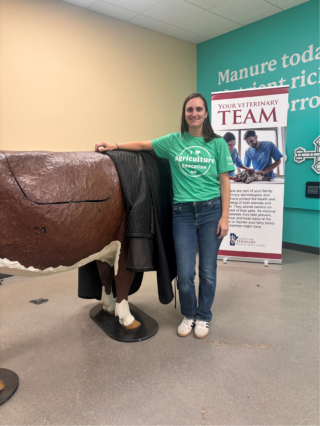
Pictured: Dr. Stephani McLean and Clover helping students discover the many ways veterinarians contribute to animal and human health.


The Manitoba Chief Veterinary Office (CVO) and industry partners would like to remind mixed animal veterinary teams that swine diseases more commonly found in commercial production systems have the potential to also affect smaller scale swine operations and pet pig properties. A recent Porcine Epidemic Diarrhea virus (PEDv) detection in a smaller commercial operation likely occurred when a producer came in contact with the disease at a provincial slaughter facility.

For those less familiar with the swine industry, PEDv is a highly transmissible viral disease that causes significant economic and animal welfare impacts. The disease is an ongoing risk in the swine industry, with high traffic commercial sites, such as assembly yards where cull sows are collected and large slaughter facilities receiving sows from outside of Manitoba, often test PCR positive on environmental sampling. Although PEDv can infect all production stages of swine, young piglets are the most heavily impacted and high levels of mortality are usually experienced in 7–10-day old piglets. Other signs noted in infected pigs include vomiting, diarrhea, and dehydration. Pig owners are encouraged to discuss practical disease prevention (biosecurity) plans tailored to their unique farm system or yard with their herd veterinarian. Veterinarians with questions about PEDv or biosecurity for small holder swine and mixed animal veterinary clinics are welcome to reach out to the CVO at chiefveterinaryoffice@gov.mb.ca or 1-204-945-7663.


Date: June 12, 2026

Manitoban veterinary professionals are advised of rising cases of New World screwworm (NWS) in Mexico and the United States. As of June 11, 2026, eight cases have been confirmed in Texas (6 cattle, 2 goat cases), and one case in a dog from New Mexico. These mark the first detections of NWS in the United States since 2016.


What is New World Screwworm?

NWS is a parasitic fly (Cochliomyia hominivorax) endemic in South America and many Caribbean countries. During the larval stage, maggots eat the living flesh of their warm-blooded host causing significant tissue damage and creating opportunities for secondary bacterial infections. If left untreated, an infestation of NWS can be fatal.

• Any animal or person with an open wound is at increased risk of contracting NWS.
• Livestock is at highest risk of infestation, especially at the umbilicus and wounds from dehorning and castration. NWS can also infest wildlife, pets, occasionally birds, and people.
• In Canada, NWS is a federal immediately notifiable disease.
• The USA eradicated NWS in 1966, and use of the Sterile Insect Technique created a barrier zone at Panama’s Darién Gap between Central and South America. The barrier failed in 2023, and NWS re-emerged in Mexico in late 2024.
• The Centers for Disease Control and Prevention (CDC) reports more than 170,000 cumulative cases of NWS in animals in Mexico and Central America, and more than 2000 cases in humans. Sustained, year-round transmission of the fly life cycle requires regular daily air temperatures between 25°C and 30°C and a relative humidity of 30% to 70%.
• While most regions in Canada are considered very low risk for the establishment of NWS, localized cases and seasonal establishment are still a risk to animal health and could trigger potential trade impacts if NWS was detected in Canada.


Import Restrictions for Livestock

On June 5, 2026, the Canadian Food Inspection Agency (CFIA) issued a news release announcing temporary import restrictions for livestock, including horses, from the State of Texas.

• Livestock/horses will not be permitted into Canada if they have been in Texas at any time within the previous 21 days.
• Livestock/horses from Texas are required to reside in another state for a minimum of 21 days before entry into Canada would be permitted.
• Strict import restrictions on livestock/horses remain in place for Mexico.

For additional information on livestock import requirements, see the Automated Import Reference System (AIRS) or contact your local CFIA district office.


Companion Animal Context

There are currently no import restrictions for companion animals moving into Canada from areas impacted by NWS.

• There have been over 3000 canine cases reported since the current outbreak in Mexico began in November 2024.
• As of June 8, 2026, there are currently 662 active cases of NWS in dogs in Mexico.
• Dogs present a potential risk factor for entry of NWS into Canada that may lead to temporary transmission pathways, and significant impacts to other animals and people.
• Both Credelio/Credelio CAT and NexGard/NexGard Combo are effective extra-label in cats and dogs at killing the larval stage of NWS.


Recommendations for Veterinary Professionals

• Clinical signs of NWS include swellings, foul odor, unresolving wounds, and visible burrowing maggots. Infestations with NWS (myiasis) can be very deep with secondary infections that can be fatal if untreated.
• In livestock, wounds may be in discrete locations that are not easily observed. It can also be difficult to detect infested wounds in heavy coated dog and cat breeds.
• Report any suspected cases to the CFIA, especially if there is a history of travel, and save maggots for confirmatory testing.
• Treatment includes physical removal of maggots and wound debridement. Remove all larvae and place them in 70% ethanol to kill them (never throw them outside or in the trash). It is critical that the larvae do not drop to the soil where they can complete their life cycle.
• Injectable ivermectin and doramectin may be given extra-label in livestock/horses under veterinary supervision. Topical products including F10 Antiseptic Wound Spray with Insecticide may also be considered extra-label. Other drugs including but not limited to Negasunt Powder may be available under emergency drug release. In the event of a NWS detection, treatment options would be advised by the CFIA in consultation with the Veterinary Drugs Directorate (VDD).
• Isoxazoline-based oral products have efficacy for both prevention and treatment in cats and dogs.
• Recommend and prescribe Credelio or NexGard for cats and dogs travelling from warm climates 24 hours prior to re-entry into Canada with a follow up dose in 30 days.
• Discuss potential implications for clients travelling to Mexico or Texas with livestock, horses, and pets.


Summary

NWS is a serious and life-threatening myiasis-causing parasitic fly that can infest both animals and people. Rising cases of NWS in Mexico and the State of Texas highlight the potential risk factors for disease incursion into Canada. Veterinarians remain a first line of defense to combat animal health and public health threats including but not limited to NWS. Preventative ectoparasitic treatment options remain readily available for companion animals travelling or entering Canada from warm climates.


For further information or guidance, veterinarians may contact their local CFIA district office or the office of the provincial Chief Veterinarian at 204-945-7663.

For more information on NWS and the current situation in the United States visit:
• New World Screwworm Confirmed Detections Dashboard | USDA APHIS
• Emergency Response NWS | USDA Animal and Plant Health Inspection Service
• Screwworm.gov | Unified Government Response To Protect the United State
CANCELLED

After careful consideration, the Manitoba Veterinary Medical Association has made the difficult decision to cancel this year’s event. While we were looking forward to bringing together veterinary students and Manitoba’s veterinary community, we were unable to secure sufficient participation from veterinary professionals to deliver the meaningful networking, mentorship, and connection opportunities we had planned.

We sincerely appreciate the support of our hosts, partners, veterinary professionals, and students who expressed interest in being part of this initiative. We remain committed to creating opportunities that support veterinary students and strengthen connections within Manitoba’s veterinary community.

NextGen Vets: Summer Student Days 2026

Building Connections and Knowledge for Future Veterinary Leaders

July 16–17 | Winnipeg & Stonewall

Please note: NextGen Vets: Summer Student Days 2026 has been cancelled.


Student Networking Mixer

Thursday, July 16, 2026
6:00 PM to 9:00 PM
Local Public Eatery, Garry Street, Winnipeg

What to Expect

Join us for an evening of great food, relaxed conversation, and valuable networking. Meet practicing veterinarians, registered veterinary technologists, clinic managers, and fellow students in a casual atmosphere.

For Students

Student registration is free and includes food and non-alcoholic beverages. This is an opportunity to ask questions, learn about different career paths, and meet professionals from clinics across Manitoba.

For Veterinary Professionals

Each practice may register up to two representatives. Meet veterinary students before graduation, share your experiences, and introduce your clinic to the next generation of veterinary professionals.

Please Note

We’ll be there to welcome you starting at 6:00 PM, which is when we have access to the venue. When you arrive, stop by the welcome table to pick up your name tag before joining the event. There is no formal networking schedule, so you’re free to mingle at your own pace and enjoy the evening. Hailey will be available throughout the event if you have any questions or need assistance.

Student Registration – CLOSED

Professional Registration – CLOSED


Bison and Elk Farm Tours

Friday, July 17, 2026
Stonewall, Manitoba

What to Expect

Continue your NextGen Vets experience with a behind-the-scenes look at a unique livestock operation in Manitoba. Learn about herd health, production practices, and the role veterinarians play in caring for bison while connecting with fellow students and professionals.

Included with Your Registration

  • Guided tour of Rockwood Bison Ranch
  • Informal Q&A

Please Note:

A visit to Elk Ranch is currently to be determined. If this additional stop is confirmed, the tour schedule will be updated accordingly, and the event will likely conclude at 12:30 PM instead of 11:30 AM. Updated itinerary details will be shared with all registered participants as soon as they are confirmed.


Registration – CLOSED


Questions?

Contact: engagement@mvma.ca


The MVMA is seeking veterinarians and registered veterinary technologists to volunteer at Ag in the Classroom Manitoba’s Amazing Ag Adventure, taking place September 22 to 25, 2026, at the Bruce D. Campbell Farm & Food Discovery Centre.

This annual event introduces students to Manitoba agriculture and the many career opportunities within the industry. Over four days, approximately 1,000 students from Grades 3 to 12 will participate in hands-on learning experiences, including a visit to the veterinary medicine station hosted by the MVMA.

Volunteers will help engage students as they explore veterinary medicine through interactive displays and activities. The station will feature Clover, 4-H Manitoba’s demonstration calving cow, along with calving equipment, microscope demonstrations, and other veterinary learning tools. Volunteers who are comfortable discussing calving and livestock health are especially encouraged to participate.

This is a rewarding opportunity to inspire young people, share your passion for veterinary medicine, and help students connect with agriculture in a meaningful way.

Event Details

Location: Bruce D. Campbell Farm & Food Discovery Centre (Glenlea Research Station)

Dates: September 22 to 25, 2026

Student Tour Hours: 10:00 a.m. to 2:00 p.m.

Volunteer Commitment: Approximately 9:00 a.m. to 2:00 p.m.

Lunch will be provided.

We are looking for two to three volunteers per day. Whether you can help for one day or multiple days, your support is greatly appreciated.

To volunteer or learn more, please contact Deanne.Wilkinson@gov.mb.ca


MVMA full colour-01

ABOUT THE MVMA

Mission: To protect the public through the regulation of veterinary medicine, to support our members and to promote the profession in Manitoba.

Vision: A sustainable veterinary community working together to prioritize the health and welfare of animals, people and the environment.

Equity, Diversity and Inclusion Statement: The MVMA is committed to equity, diversity and inclusion across gender identity, ethnicity, religion, age, neurodiversity, physical or mental ability, sexual orientation, and marital status. The MVMA membership is multicultural and we value multiple approaches and different points of view in a safe, positive and collaborative environment.

INFORMATION

Become an MVMA Member – Learn about the requirements to become a licensed veterinarian or registered veterinary technologist.

Veterinary Medicine – Find out how veterinary medicine impacts the lives of animals.

©2019 MVMA. All rights reserved.